
By Author
Creating a Welcoming & Secure Environment for Therapy in Houston, TX
Creating a safe and welcoming environment is essential for effective therapy. A comfortable space can make clients feel more at ease, which helps in their healing process.
Understanding the Importance of a Safe Space in Therapy
A safe space in therapy allows clients to express themselves without fear of judgment. When clients feel emotionally safe, they’re more likely to open up, leading to deeper and more meaningful conversations.
Why Does a Safe Space Matter?
Emotional safety is a crucial aspect of therapy. It helps clients feel understood and validated, which is fundamental for effective treatment.
Physical Environment vs. Emotional Safety
The physical environment can significantly impact a client’s emotional experience. A peaceful and inviting space can reduce anxiety and foster openness during sessions.
Practical Tips for Creating a Safe Physical Environment
Therapists can take practical steps to design their spaces to invite comfort and security.
Choosing the Right Location
Accessibility is key; a location that is easy to reach encourages clients to attend consistently. Furthermore, the overall ambiance should be calming and inviting.
Design Elements to Consider
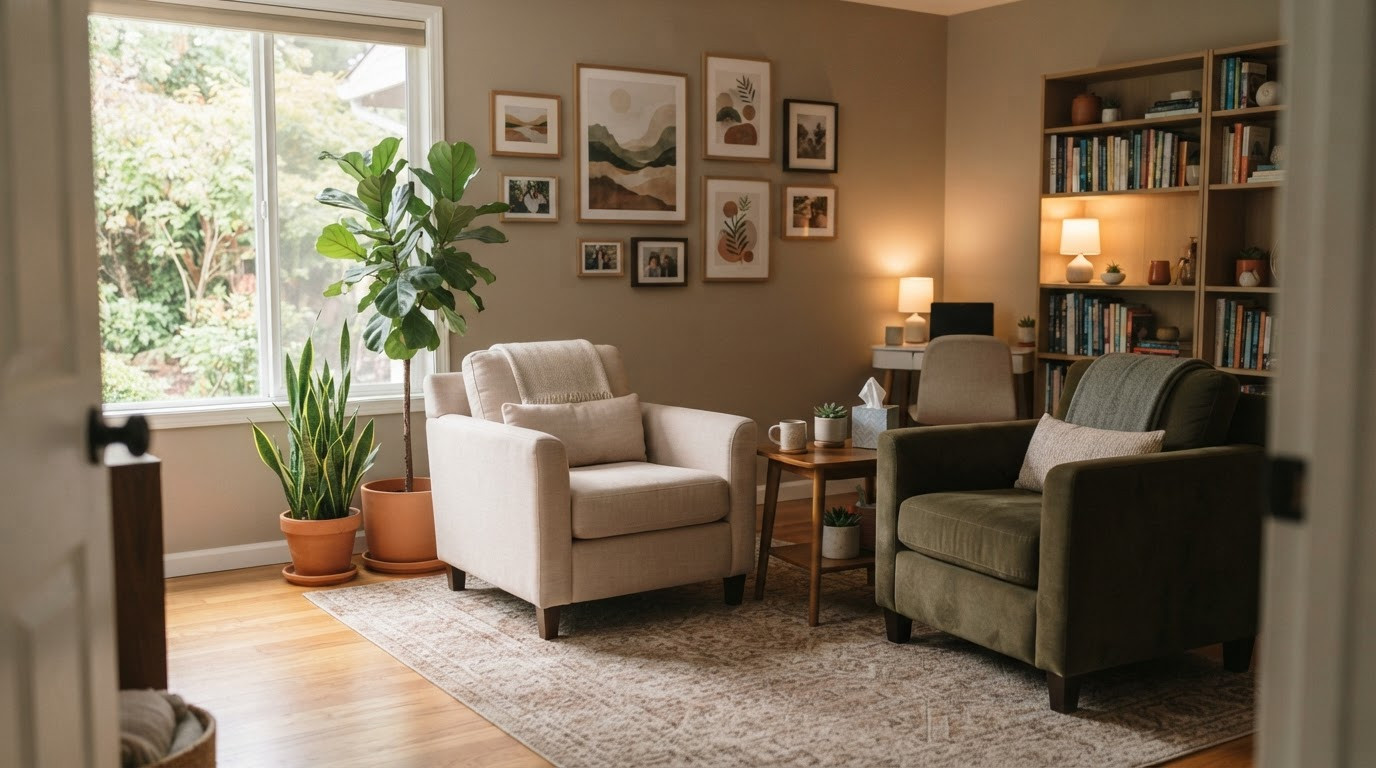
Elements such as soft lighting, warm color schemes, comfortable furniture, and soothing decor contribute to a calming atmosphere. All these factors can make a client feel more relaxed and secure.
Ensuring Privacy and Confidentiality
It’s essential to protect client confidentiality. Therapists should arrange their space to prevent accidental eavesdropping and ensure that conversations remain private.
Fostering Emotional Safety During Sessions
Creating emotional safety is just as important as the physical space.
Active Listening and Non-Judgmental Attitude
Being an active listener and approaching sessions with a non-judgmental attitude can make clients feel valued and safe. This openness encourages clients to share their thoughts and feelings.
Setting Boundaries
Establishing clear boundaries and expectations during sessions can provide a sense of safety for clients. Knowing the limits helps in building trust and security.
Encouraging Client Feedback
Inviting clients to give feedback on their comfort within the therapy environment and structure of sessions is vital. This practice can help reshape the therapy to better meet their needs.
Building Trust Through Consistency
Consistency in therapy greatly impacts client trust.
Consistent Space Usage
Using the same physical space for sessions reinforces stability, helping clients feel grounded.
Routine and Predictability
Establishing a routine can create a sense of safety. Predictable elements in therapy sessions help clients know what to expect and can reduce anxiety.
Evaluating and Improving Your Space and Practice
Therapists should regularly assess their environments and practices.
Seeking Client Feedback on Comfort
Collecting feedback can help therapists understand how comfortable their clients feel in the space. Various methods, such as informal questions or surveys, can be helpful.
Adapting to Client Needs
Flexibility is key in adapting the space or approach based on the individual requirements of each client. Personalizing the experience can improve client satisfaction.
A welcoming and secure environment can significantly enhance the therapeutic process. By paying attention to both physical and emotional safety, therapists can support clients in their journey toward healing and growth.
FAQ
1. How can I make my therapy space more inviting?
You can make your therapy space more inviting by choosing calming colors, incorporating comfortable furniture, and ensuring good lighting. Small touches, like plants or art, can also enhance the atmosphere.
2. What should I do if a client feels unsafe during a session?
If a client feels unsafe, it’s important to address their concerns immediately. Encourage them to express what is making them uncomfortable and work together to find a solution.
3. How often should I evaluate my therapy space?
Evaluating your therapy space regularly—perhaps every few months—can help you identify areas for improvement. Collect client feedback to understand their comfort and needs better.
Leave a Reply